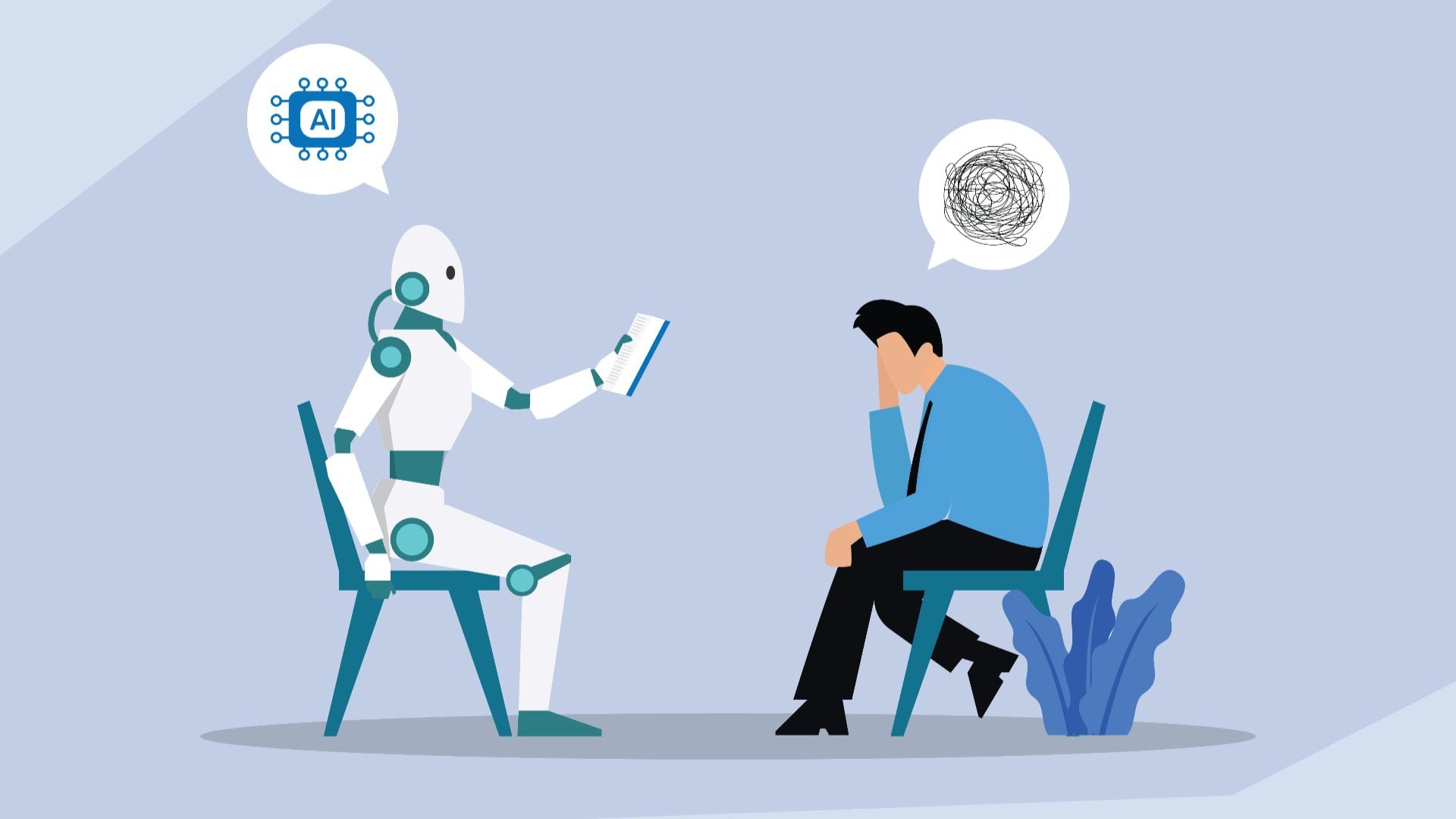
It feels like artificial intelligence (AI) is everywhere right now, even if you don’t realize it. You’ve probably encountered it on the phone, chatting with customer service on a website, and maybe even in your email. And because it’s everywhere, you’ve probably heard about AI therapy and wondered what it’s all about. AI therapy is relatively new and has the potential to shake things up. While it’s still in its infancy, there are some pros to engaging in this type of therapy, but there are still many cons. Here’s what to know about AI therapy and what to consider before you sign up.
What Is AI Therapy?
When most people think of AI therapy, they probably think of talking to a robot for mental health advice. While that’s one part of AI therapy, it’s really an umbrella term that describes the use of AI systems to provide a wide range of services — everything from interactive patient care to supportive services that aid human therapists.
Some examples of these AI tools are:
- AI chatbots: Speaking with an AI-powered bot to manage mental health conditions
- Mental health apps: Using supportive tools, like mood trackers or guided meditation
- Therapist tools: Leveraging AI technology to create patient treatment plans, predict outcomes, or analyze patient data
How Does AI Therapy Work?
AI therapy tools work differently depending on who they support and what the underlying technology powering them is. Ultimately, though, all AI therapy tools have the same goal: to improve the mental health support every patient receives.
Chatbots
AI chatbots are an adaptive technology. A patent discusses their mental health condition and concerns, and the chatbot creates real-time responses to help the patient manage them, much like a human therapist would.
These AI systems are often built on natural language processing (NLP) or large language models (LLM) technologies. Generally speaking, these AI models are trained on information about therapeutic techniques, like a textbook about cognitive behavioral therapy (CBT). As the model is trained, a human reviewer provides feedback on the responses, improving the bot’s responses and making them more appropriate for a mental health chatbot.
Mental Health Apps
Some mental health apps or platforms have AI-powered tools that provide supplemental mental health support to help a patient manage their condition. For example, a gentle reminder to journal at the end of every day can help someone let go of anything that’s bothering them so they get a better night’s sleep. Helping a patient through guided meditation may help them start each day in a positive frame of mind.
Mood tracking is another function that may be embedded in a tool to help the patient and clinician get additional insights into the patient’s daily, weekly, and monthly moods to better understand how this impacts their functioning and well-being.
Predictive and Monitoring Tools
Some tools are designed to help the patient and the therapist. For example, when engaged in a virtual session with a human therapist, monitoring tools used during the session may analyze the patient’s language or voice to help predict behavior or mood trends. Integrating data analysis from a smart device may help uncover the behavioral indicators that predict a mental health crisis.
Pros of AI Therapy
AI therapy is still relatively new and not appropriate for everyone. However, some of the pros of AI therapy are real and worth considering.
Fills a Gap
Probably the biggest pro of AI therapy is that it fills the unfortunate gap many people find when they try to access mental health services. Between insurance coverage, out-of-pocket expenses, and a limited number of traditional therapy providers, some people may not be able to get the mental health care they want when they need it.
Even if these aren’t an issue, a human therapist isn’t available around the clock. If a patient wants to speak with their therapist at 2:00 AM about a bad dream or something that just occurred to them, it’s highly unlikely the therapist will be available.
AI therapists fill that gap, allowing someone to talk through their concerns and provide emotional support whenever and wherever they need to.
Lower Cost
Some telehealth services with AI therapy charge a fee, while others offer it for free. Either way, AI therapy is often far less expensive than seeing a human therapist and, in some cases, covered by insurance, making it a more accessible and affordable option.
Flexible
A 2025 study found that the flexibility of AI therapy had a positive impact on patients, particularly when they needed immediate and supplemental mental health support. While the study only looked at people with a major depressive disorder, generalized anxiety disorder, or an eating disorder, participants felt better after talking with an AI therapist when they wanted and needed to.
It’s important to note that the researchers emphasized that AI therapy is not ready to replace human therapists. Using AI therapy this way can supplement and support traditional therapy with a human therapist.
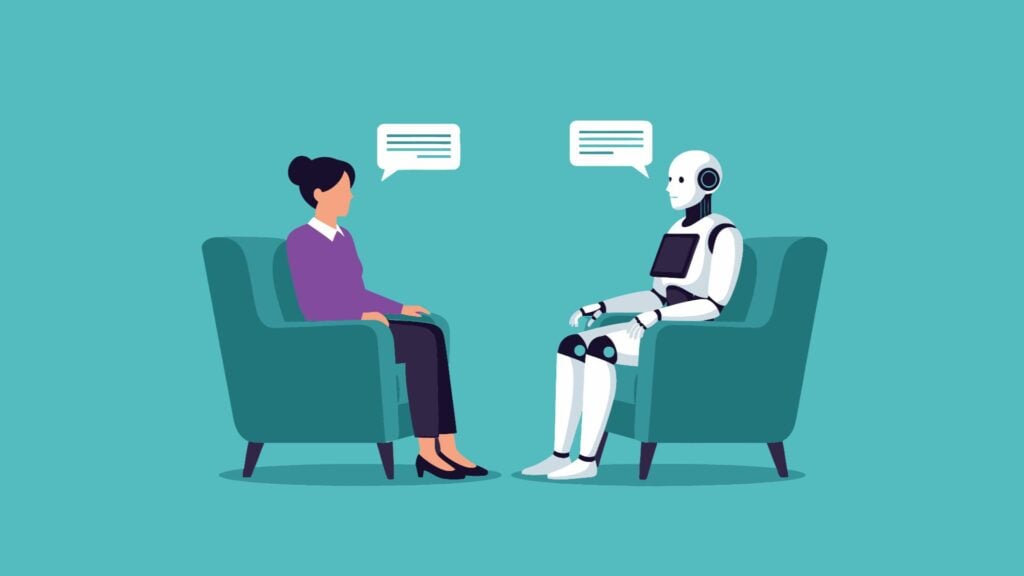
Cons of AI Therapy
While AI therapy shows promise, it’s not without criticism — including from those who have created AI therapy apps. Joe Braidwood, the founder of Yara AI, shut the platform down, citing his concerns around safety and the difference between wellness and health support and mental health care.
Not Tailored
AI responses are limited, even if it doesn’t feel that way. It’s only able to provide mental health advice and guidance based on its training data, which is broad and vague. The AI therapist can only provide advice based on this information, and it may be too generic or helpful for your specific situation.
More importantly, there’s no way to know exactly what mental health data it was trained on or if a licensed therapist reviewed the outputs. This is quite different from a licensed human therapist who attended school and trained with an expert who helped guide and shape their techniques and advice.
Lacks a Human Touch
No pun intended, but another con of AI therapy is that it lacks a human touch. The AI therapist may say it feels sorry about your situation and seems empathetic, but it often lacks the true emotional insight and compassion needed to support someone struggling with their mental health.
It’s where “reading the room” comes into play. You can tell an AI therapist you’re fine, even when that’s not the case, and the AI will likely believe you. A trained therapist, though, might hear the tremor in your voice or notice a change in your body language that indicates you may be as fine as you say you are.
Not a Trained Mental Health Professional
No matter what platform you use, if you aren’t talking to a human, the AI therapist you’re communicating with is not a licensed therapist, which means it cannot diagnose your mental health condition and could potentially miss the warning signs of a serious mental health condition.
What’s more, AI therapists may tell you what you want to hear, not what you need to hear, which could become an obstacle to improving your mental health. You’re unlikely to encounter this with a professional mental health care provider. With compassion and empathy, they will guide you through these “hard truths” to help you recover and heal.
Privacy Concerns
While some mental health platforms are HIPAA compliant, not all are, which could put your personal information at risk. Beyond the basic information like your name and birthdate, your private chats and mental health concerns could be leaked or shared with the wrong people.
Banned in Some States
Finally, some states have banned the use of AI therapists, citing concerns around a lack of accountability and clinical oversight. For example, in Illinois, clinicians cannot use AI to chat with patients, diagnose them, or create a treatment plan — even when it’s reviewed by a human. And this ban extends to telehealth platforms that aren’t based in the state.
Human Powered Therapy
There’s still a lot to learn about AI therapy, but for now, a human therapist may be the better choice. It’s far easier to check their credentials, and they’re far more likely to provide the customized treatment and support you need for your situation. While AI therapy can provide supplemental mental health support, it’s not the same thing as getting care from a qualified mental health professional.
At Anchor Light Couples and Family Therapy, our qualified and licensed human therapists can provide you with the compassionate, caring professional help and support you need, no matter where you are in your mental health journey. Schedule a free consultation today and learn more about services.